
Table of contents:
In Gridly, you can import and export JSON files, as well as be able to update records in Grids.
Import JSON files
- In the Project page, under the selected database, click Add Grid.
- Select Import data in the dropdown selection.
- Select the JSON file you want to import.
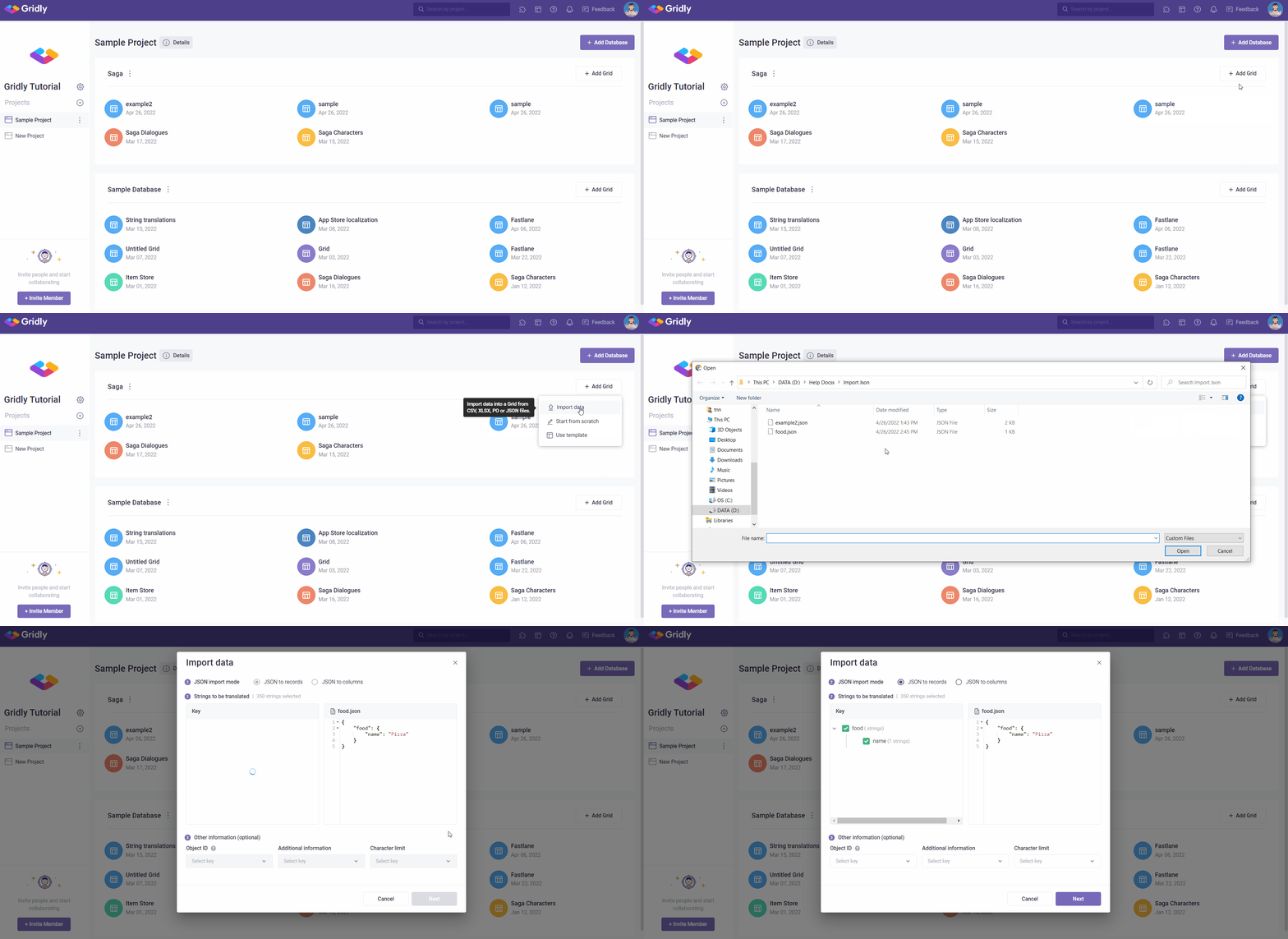
- Select the JSON import mode:
- JSON to records: JSON properties are mapped into Gridly records
- JSON to columns: JSON properties are mapped into Gridly columns.
Select different keys you want to import by checking the boxes in the Key section, the non-selected key will be omitted in the Grid.
- Select the key in JSON to be the Object ID, Additional Information or the Character limit. You can pass this step if not necessary.
- Click Next.
- Enter the Translation Grid name. The name of the imported file is set as the Translation Grid name by default.
- Select the Project type as Single-step or Multi-step.
- Select the source language from the dropdown list.
- Select the target language.
- Click Create.
Why object ID mapping matters
When you first import your JSON file, map a key as the Object ID. This lets Gridly match records by ID later, so you can bring in updated JSON files without disturbing translations already in progress.
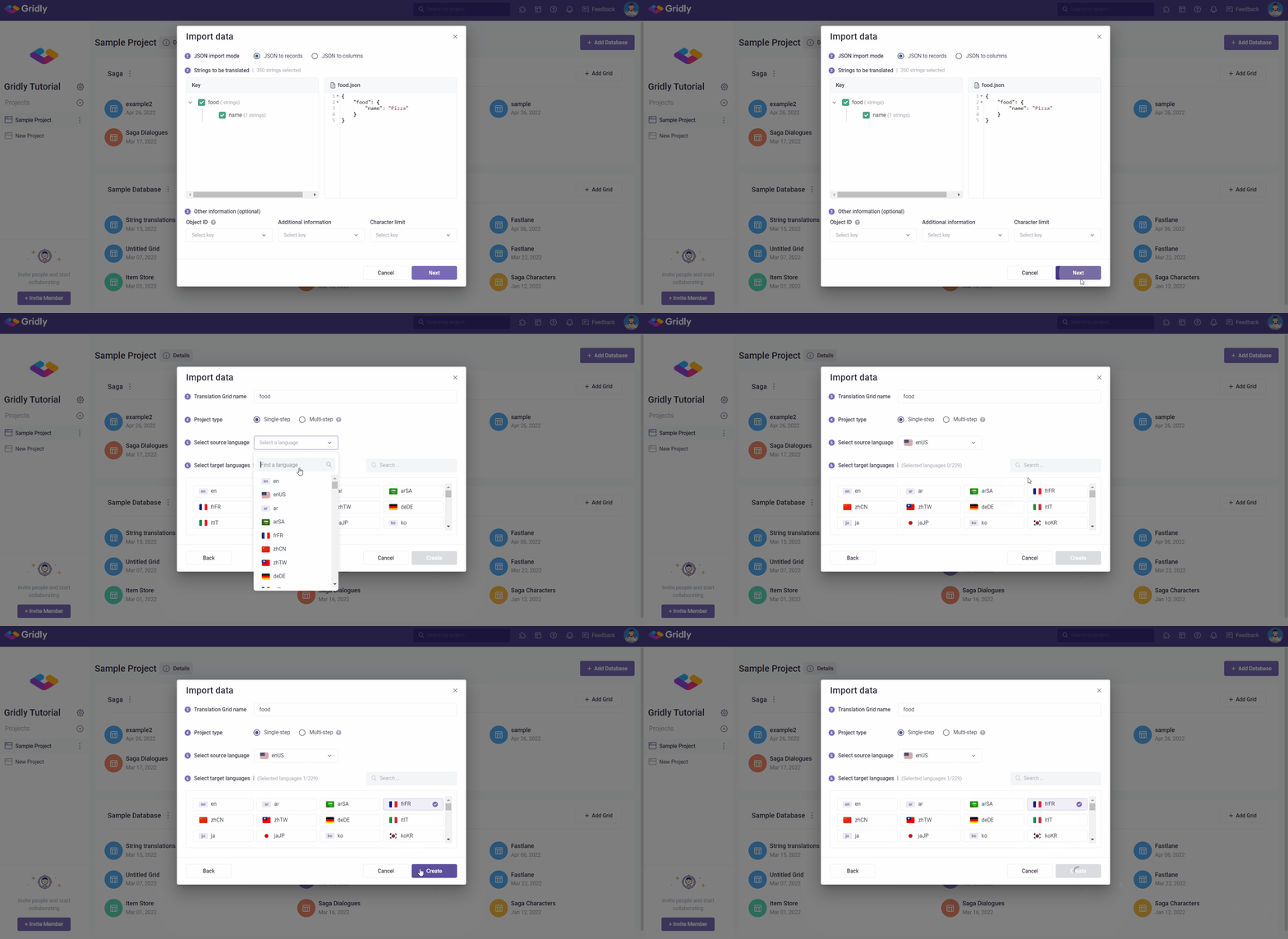
A new Grid is created with the imported JSON data.
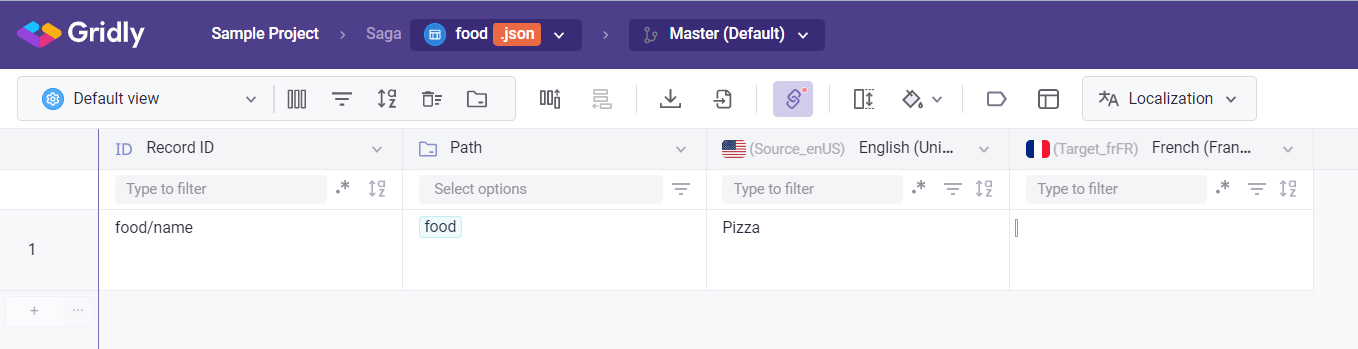
Based on the property path food/name , the created record:
- is contained in path
food - has record ID
food/name - has source text
Pizza
Add or update records
You can't create a new record directly in a Grid imported from JSON. If you click Create record and see the message "inserting records is not permitted in a JSON grid," this is expected. Records are added or updated through localization import instead.
To add new records or update existing ones:
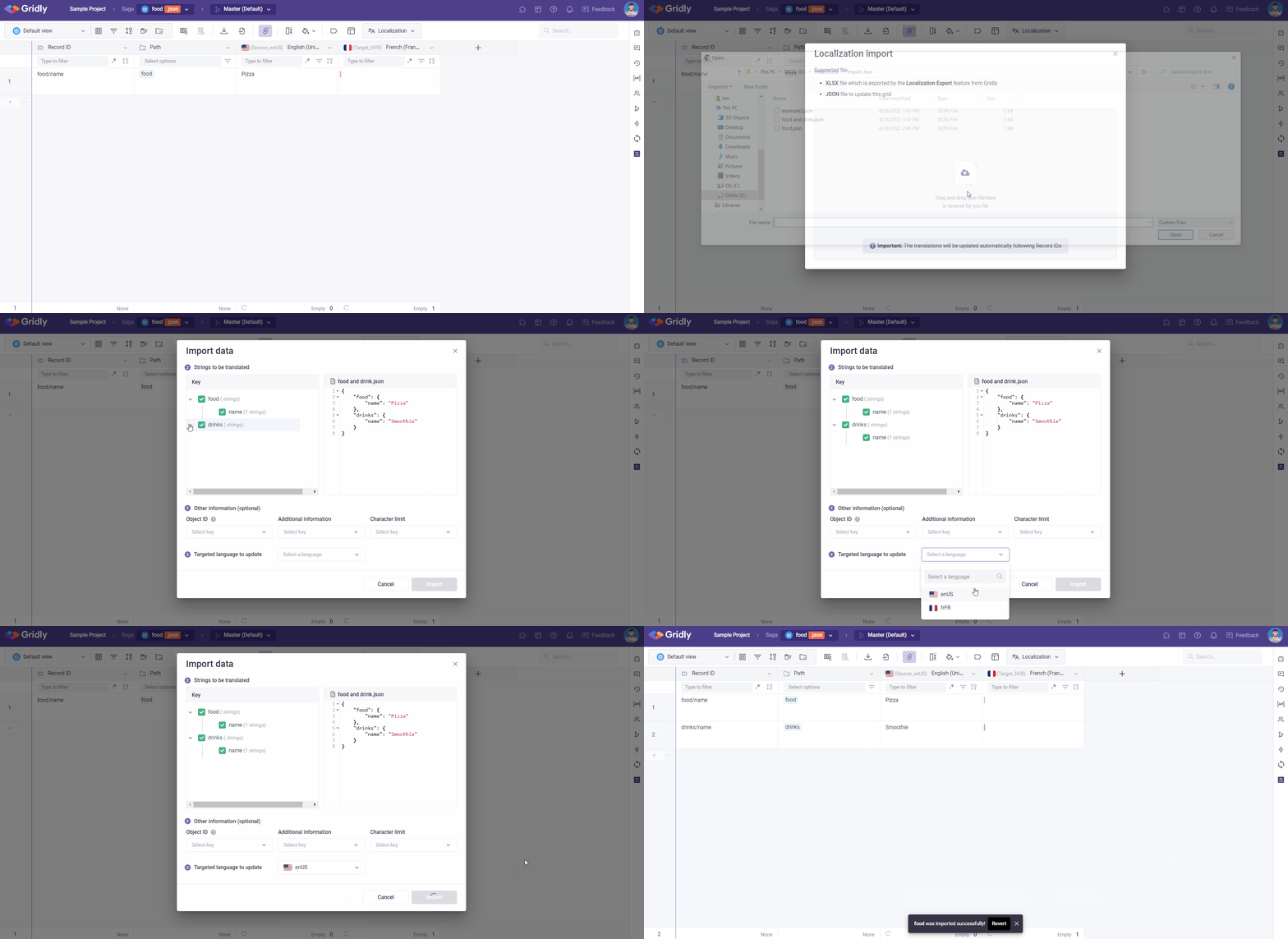
- Open a Grid with JSON imported data, then select
 in the toolbar.
 - Select Localization import from the dropdown list.
- Drag and drop a JSON file to add new records, or update existing records.
- Select Other information if needed.
- Select the target language to update. If you want to update the translation, select your target language in Grid as the Targeted language to update. Translations update based on matching record IDs.
Exporting JSON files
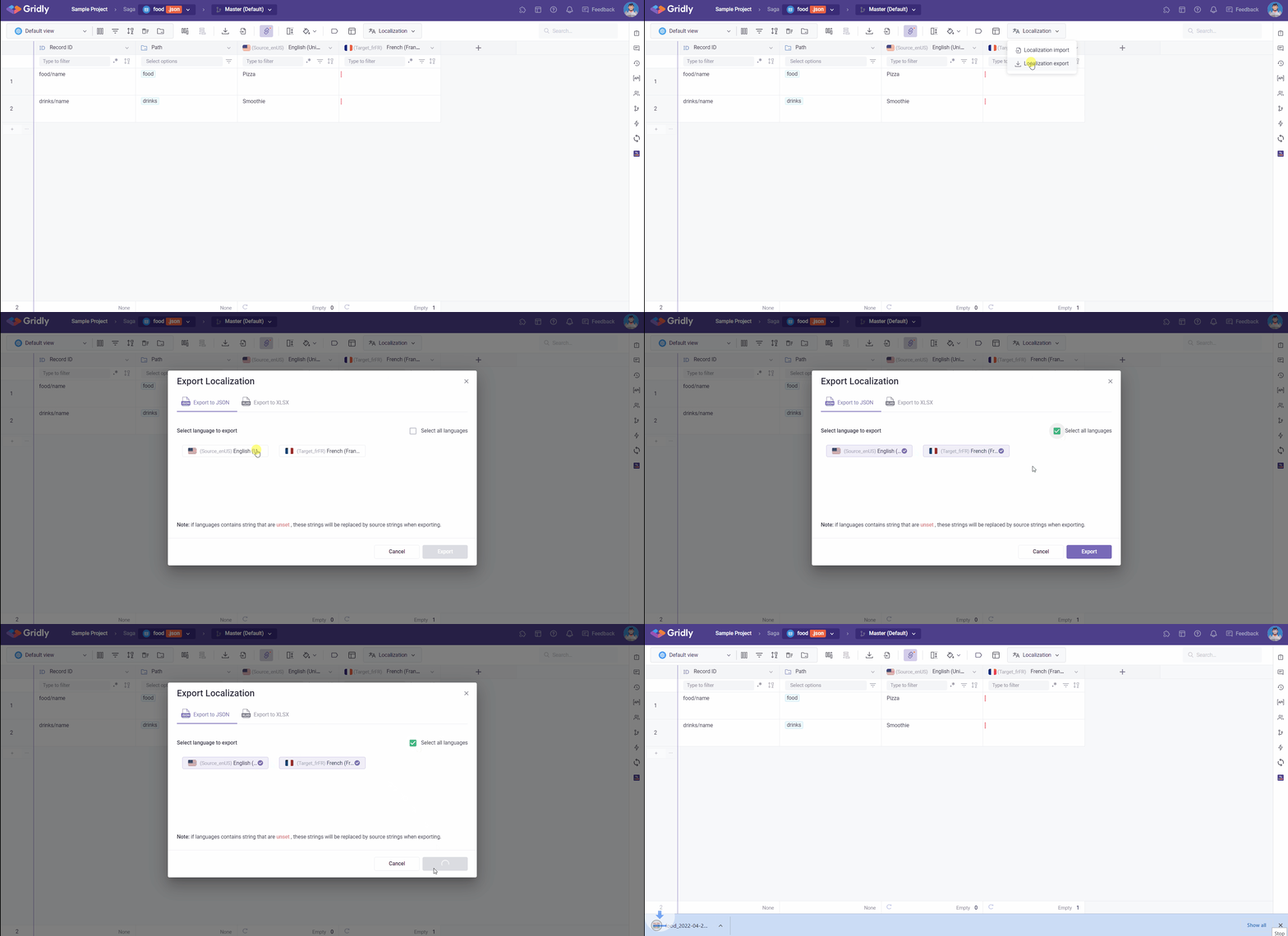
- Open a Grid with JSON imported data, then select in the toolbar.
- Select Localization export from the dropdown list.
- Export to JSON tab is opened by default.
- Select the languages you want to export. You can also select "export all languages".
- Click Export.
If languages contain strings that are unset, these strings will be replaced by source string text when exporting.